⚡ Quick Bites (TL;DR) – Pro Tip: Always verify your pre-approved card limits two weeks before major festive sales begin. Instant bank discounts on platforms like Amazon and Flipkart deplete algorithmic server quotas within the initial sixty minutes of early access windows.
⚡ Quick Bites (TL;DR) – Strategic Warning: A No-Cost EMI plan is not entirely cost-free. While the merchant absorbs the bank interest as an upfront product discount, the cardholder remains legally liable for a non-refundable bank processing fee and 18% GST levied on each monthly interest segment.
⚡ Quick Bites (TL;DR) – Critical Alert: Avoid using non-banking finance consumer loans without understanding foreclosure and late payment penalties. Missing an installment deadline triggers compounding interest schedules that quickly negate any festive hardware savings.
The annual Indian digital retail landscape experiences a seismic transformation every year between September and October. High-intent shoppers across tier-one and tier-two cities prepare to upgrade their consumer hardware as e-commerce platforms unveil massive discount events such as the Amazon Great Indian Festival and Flipkart Big Billion Days. Successfully extracting maximum value from these high-velocity retail cycles requires an analytical perspective on modern payment structures. The intersection of merchant price subventions, institutional bank alliances, and dynamic trade-in models presents an extraordinary opportunity for cost reduction if navigated with precision.
Modern e-commerce algorithms adjust prices dynamically based on real-time consumer traffic, inventory turnover rates, and competitive price matching. For a technology enthusiast or a digital professional, securing an optimal transaction price involves evaluating the underlying financial mechanisms rather than just accepting surface-level retail markdowns. Deploying structured credit lines, strategic payment routing, and pre-negotiated exchange valuations allows consumers to dramatically lower their net cash outlay while acquiring flagship electronics.

The Structural Architecture of No-Cost EMI Mechanisms
Retail financing has become the primary operational engine powering consumer durable sales across India. Leading financial institutions partner directly with original equipment manufacturers and retail aggregators to deliver structured payment solutions. While commonly presented as an interest-free payment distribution, the underlying architecture operates via a subvention accounting framework that sophisticated consumers can leverage to their distinct advantage.
Under a standard credit arrangement, financial institutions charge an annualized percentage rate ranging between thirteen and sixteen percent on consumer durable loans. To create the consumer perception of zero interest, the merchant calculates the cumulative interest payable over the selected repayment tenure and deducts that exact monetary value from the invoice price of the gadget prior to transaction authorization. The issuing bank then finances this lowered principal amount while applying its standard interest schedule across the agreed monthly cycles. Consequently, the aggregate payments made over the duration precisely match the original retail price tag of the device.
Statutory taxation introduces nuanced considerations into this payment structure. The Reserve Bank of India mandates that all financial service fees and interest components remain subject to an eighteen percent Goods and Services Tax. Because the financial institution treats the transaction as an active interest-bearing loan on its internal ledger, this GST charge is calculated on the monthly interest component and billed directly to the customer statement. Additionally, financial institutions uniformly apply an upfront loan processing fee ranging from ninety-nine to two hundred and ninety-nine rupees plus applicable taxes during the initial billing statement cycle.
Strategic Execution for Premium Smartphone Deals
High-tier mobile devices represent the highest transaction volume during festive e-commerce sales. Device manufacturers intentionally introduce aggressive financing arrangements to capture upgrading consumers who seek high computational efficiency, cutting-edge camera sensors, and enhanced battery longevity without exhausting their liquid working capital.
Shoppers navigating these sales must systematically monitor the Premium Smartphone Offers appearing across certified digital retail networks. Leading brands systematically coordinate with private and public sector banking giants such as HDFC, State Bank of India, and ICICI Bank to deploy tiered instant discounts. Unlike traditional cashback programs that credit funds back to the user account after sixty to ninety days, instant discounts reduce the immediate checkout value deducted from your available credit limit. This distinction prevents excessive credit utilization and ensures immediate real-world savings.
Algorithmic trade-in promotions represent another powerful layer of transaction savings. E-commerce platforms frequently attach an artificial “Exchange Bonus” of two thousand to six thousand rupees above the evaluated market value of your existing hardware when trading in an operable device. To secure this top-tier trade-in valuation, users must ensure their existing smartphone displays zero screen delamination, maintains functional charging pathways, and possesses an intact physical frame. When combined with an instant credit card discount, this dual-layer reduction creates an unmatched cost-to-performance ratio for the new handset.
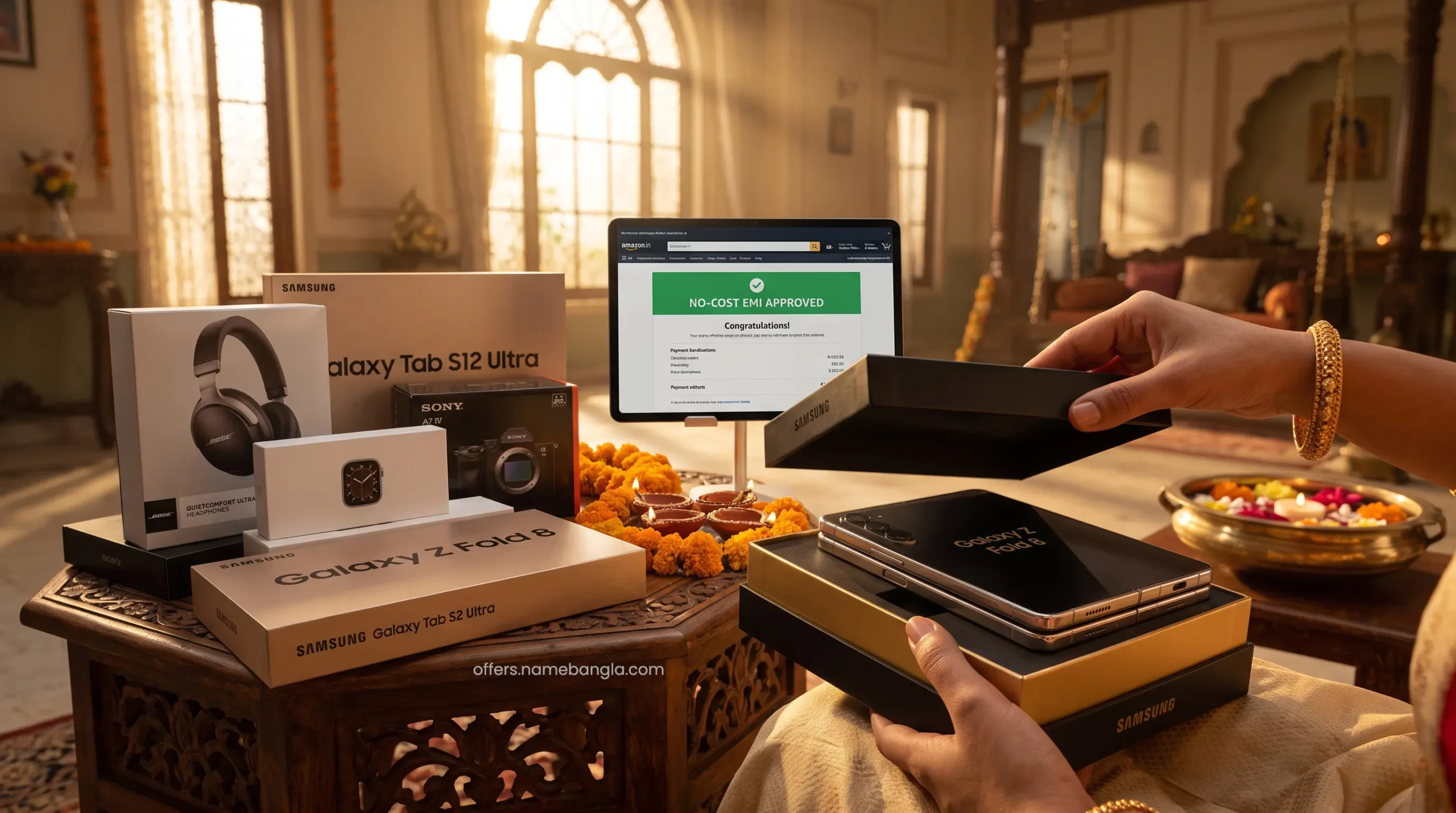
💎 Mizanur’s Smart Financing Hack
To achieve the lowest possible transactional base on flagship electronics during Indian retail sales, implement the “Tri-Stacking Pre-Closure Strategy.” Initiate your purchase by claiming the base festive price drop combined with an exchange bonus on your trade-in unit. At the final checkout portal, select a three or six-month No-Cost EMI tenure via a supported major private sector credit card. This forces the merchant system to instantly subtract the entire projected loan interest from the purchase invoice as an upfront merchant discount. Once the transaction processes and the purchase posts to your banking ledger, contact your card issuing bank to officially cancel the loan installment structure and pre-close the balance. You will absorb a small foreclosure fee of approximately three percent on the remaining balance, but you successfully retain the full upfront merchant interest subvention discount, driving your net acquisition cost well below standard payment thresholds.
High-Performance Computing and Workstation Acquisitions
While smartphones dominate overall order counts, portable computing hardware and desktop systems command the highest average transactional ticket sizes. Digital professionals, software developers, and content creators rely on the annual festival window to procure high-capacity memory, color-accurate panels, and dedicated GPU architectures at significantly lowered pricing tiers.
Securing the Best Laptop Discounts requires an understanding of cross-promotional clearance initiatives. Hardware vendors frequently discount previous-generation silicon architectures aggressively to clear existing warehouse logistics prior to introducing successive processor models. These earlier architectures consistently provide ninety to ninety-five percent of the computational efficiency of newer releases while selling at a thirty to forty percent hardware discount during promotional sales events.
High-value computing hardware frequently qualifies for specialized enterprise purchase models. Buyers with access to registered corporate email credentials or accredited university domain accounts can leverage dedicated affiliate portals to secure auxiliary direct discounts ranging from five to seven percent. Integrating these corporate price protections with festive bank subventions lowers total capital expenditure considerably. Furthermore, computing hardware consistently qualifies for extended repayment tenures up to twenty-four months without compounding interest, allowing working professionals to smooth equipment amortization over extended operational cycles.
Home Theater and Smart TV Infrastructure Upgrades
The consumer push toward larger display formats, OLED contrasts, and mini-LED backlighting reaches peak demand during the festival shopping season. Major media releases and global competitive sporting broadcasts drive households to replace legacy high-definition displays with premium smart entertainment panels.
Analyzing the Smart TV Upgrade Offers reveals unique logistical and financial dynamics. Because physical freight handling, threshold delivery, and specialized wall-mount installations represent substantial overhead, premium manufacturers bundle complimentary installation hardware, audio soundbar systems, and multi-year comprehensive panel warranties into the base festive purchase price to discourage cart abandonment.
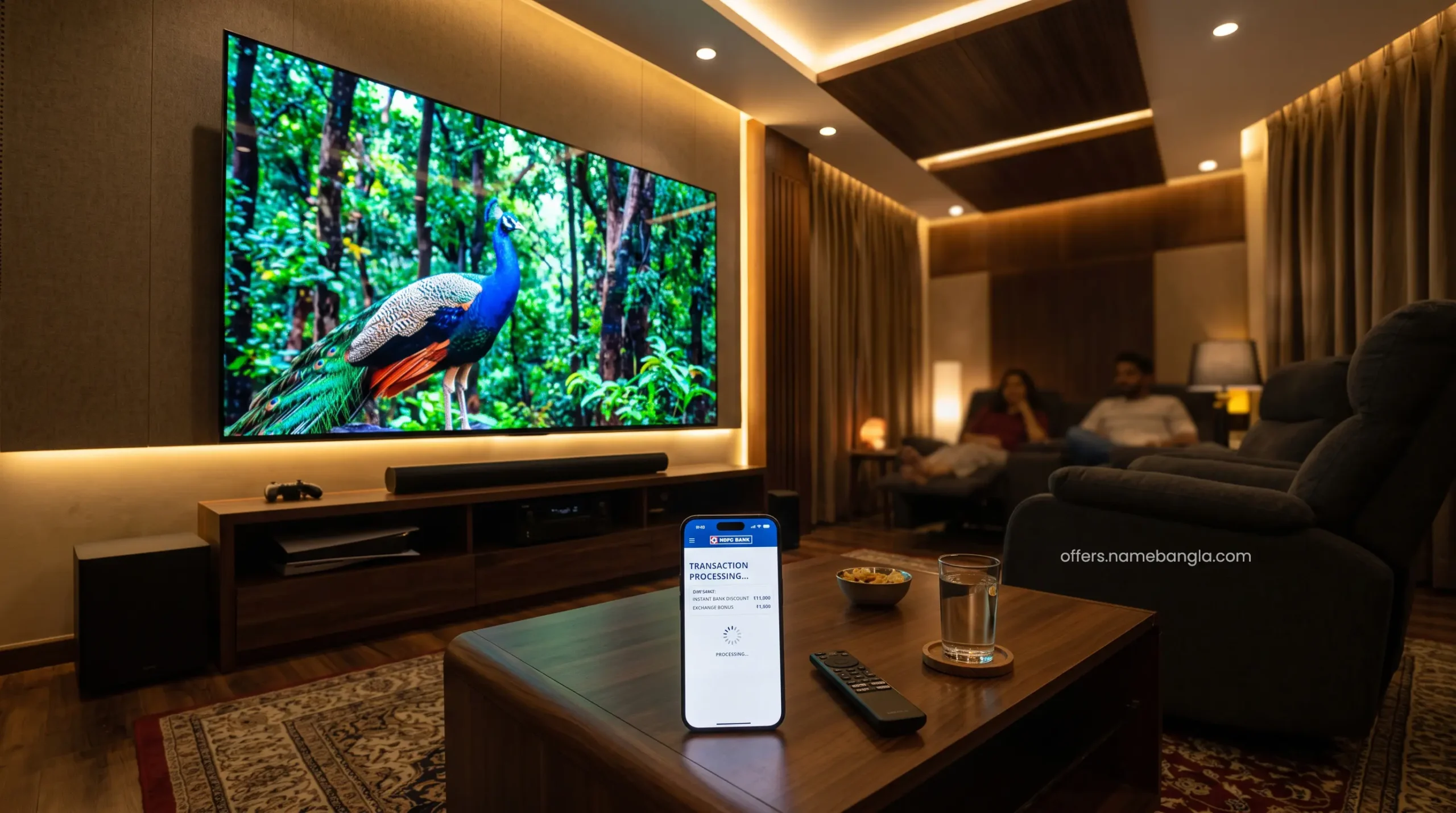
Alternative credit mechanisms, particularly consumer durable non-banking financial cards like the Bajaj Finserv EMI Network Card, dominate large appliance checkout pipelines. These payment instruments provide accessible financing pathways for consumers without traditional credit facilities, requiring zero down payments and predictable tenure structures. Nonetheless, users must review all ancillary fees carefully. Non-banking financial firms frequently assess convenience surcharges, annual platform maintenance costs, and steep penalties for late installment processing that can quickly compromise your overall festive shopping budget.
Credit Optimization and Multi-Card Reward Strategies
The core catalyst for unlocking exceptional value across digital sales lies in the precise management of your credit instruments. Deploying indiscriminate payment methods results in missed opportunities. A disciplined shopper pairs specialized payment cards with targeted hardware categories to harvest compounding rewards and cash reductions.
Co-branded e-commerce credit solutions, including the Amazon Pay ICICI card and the Flipkart Axis Bank card, deliver flat, uncapped five percent statement credits on eligible purchases. These direct cashback structures regularly outperform standard bank cards that enforce strict promotional savings caps of fifteen hundred rupees. When executing a large-ticket transaction, utilizing an uncapped reward vehicle yields substantially greater monetary savings across comprehensive order balances.
Cardholders should contact their issuing institutions ahead of the festive sale season to request temporary credit limit enhancements. High-ticket hardware acquisitions consume substantial portions of existing credit lines. Maintaining total aggregate credit line utilization below thirty percent ensures that large-scale consumer electronics purchases do not adversely depress your CIBIL rating during credit bureau reporting cycles.
Frequently Asked Questions Regarding Festive Gadget Financing
How does an upfront merchant discount function in a No-Cost EMI transaction?
The e-commerce platform calculates the total interest the bank will charge over the loan tenure and deducts that exact monetary sum from the gadget purchase price upfront, ensuring the total repayment equals the retail price.
What statutory taxes apply to consumer tech financing in India?
The Government of India levies a mandatory 18% Goods and Services Tax (GST) on all processing fees and monthly interest components charged by the financing bank.
Why are co-branded retail credit cards preferred for high-value gadget purchases?
Co-branded credit cards provide unlimited, uncapped five percent cashback on host retail platforms, whereas standard bank promotional discounts enforce strict maximum limits usually capped at ₹1,500.
Can pre-closing an installment plan reduce the net purchase price of a gadget?
Yes. If an authorized No-Cost EMI is pre-closed through your issuing bank after loan activation, the consumer retains the initial merchant interest subvention discount minus a nominal three percent foreclosure fee.
What criteria determine maximum exchange value for trade-in smartphones?
Maximum valuations require an operable display with zero cracks, a functioning battery, intact external frame housing, verifiable IMEI registration, and valid platform trade-in bonuses.

3 thoughts on “The Ultimate Blueprint for Indian Festive Tech Deals and Smart Gadget Financing in 2026”